Quick Answer
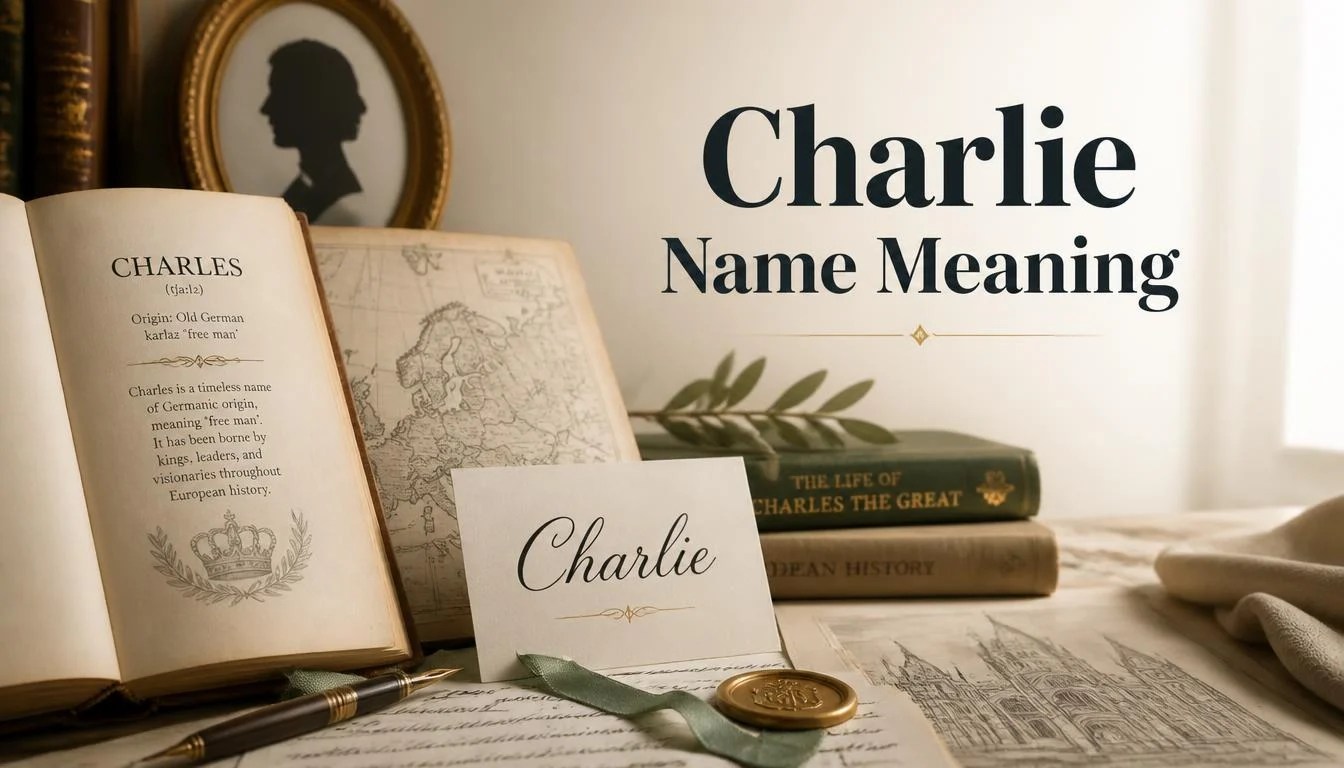
Charlie means “man” and comes from Charles, which traces back through Latin Carolus to the Germanic name Karl. Today, Charlie functions as both a masculine and feminine given name in English.
The Charlie name meaning is closely connected to the classic name Charles, which comes from the Germanic name Karl. The name is commonly understood to mean “free man” or “freeman,” giving Charlie a warm and independent character. Although Charlie began as a familiar form of Charles, it has developed into a well-established given name in its own right. Its friendly sound and timeless appeal have helped it remain popular across generations.
Charlie also carries a versatile quality because people use it for kids. Its history reaches across English-speaking cultures, while its connection to Charles gives it a long standing traditional background. Whether you are considering Charlie for a baby, researching a family name, or simply curious about its roots, exploring its origin, meaning, history, and modern use can reveal why this short name continues to attract attention.
Key Facts
| Detail | Information |
|---|---|
| Gender | Boy and Girl / Unisex |
| Meaning | “Man” |
| Origin | Germanic, through Charles and Latin Carolus |
| Language | English usage; related to French Charles |
| Pronunciation | CHAR-lee |
| Related Name | Charles |
| Common Variants | Charley, Charli, Charly |
What Is Charlie?
Charlie is an English given name that developed as a diminutive form of Charles. It can also function as a feminine form, which gives the name its modern unisex character. In English, the usual pronunciation is CHAR-lee.
Unlike a completely separate name with its own unrelated root, Charlie has a direct linguistic connection to Charles. The relationship is similar to other familiar forms that began as shortened or affectionate versions of longer traditional names.
Today, parents can choose Charlie as the child’s legal first name rather than using Charles on official records and Charlie informally. The name therefore works both as a traditional nickname and as a standalone given name.
Charlie Meaning
The traditional meaning attached to Charlie is “man.” That meaning comes from Charles, which derives from Latin Carolus and ultimately from the Germanic name Karl.
Traditional Meaning
The Germanic root behind Karl is commonly connected with a word meaning “man.” Some etymological sources have proposed a different Germanic connection involving harjaz, meaning “army,” but the “man” explanation is the commonly cited interpretation for Charles and Charlie.
So, when someone asks “What does Charlie mean?”, the clearest traditional answer is “man.”
Modern Meaning and Feel
A name’s historical meaning and its modern associations are not always the same thing. Charlie often feels warm, informal, youthful, and approachable in contemporary English.
That impression comes from centuries of use as a familiar form of Charles. Its short structure also gives it an easy, conversational quality.
Origin and Etymology
Charlie ultimately connects to the Germanic name Karl. Latin speakers rendered the name as Carolus, which later produced forms such as Charles in French and English. Charlie developed from Charles as a diminutive or familiar form.
The linguistic chain can be summarized simply:
Germanic Karl → Latin Carolus → Charles → Charlie
The history also explains why Charlie has relatives across Europe. Related forms include Carl, Carlo, Carlos, Karl, and other regional versions of the same broader naming family.
The name Charles gained considerable prominence in Europe through Charlemagne, also known as Charles the Great. Several European rulers later carried Charles in different forms, helping establish the name across multiple languages and regions.
History and Cultural Context
Charlie inherited much of its historical background from Charles. Charles became particularly prominent in European royal and political history, while Charlie developed a more familiar and informal role in English naming.
In Britain, Charles became established as a given name among the royal and aristocratic classes. The name became common there by the 17th century, particularly after Charles I of England.
Charlie later gained a strong identity of its own. It became familiar in everyday English speech and eventually appeared as both a masculine and feminine given name. That flexibility distinguishes modern Charlie from Charles, which remains traditionally masculine in English usage.
The name also has a strong place in popular culture. Charlie Chaplin helped give the name enormous recognition through his famous screen persona, while fictional Charlie Brown became another widely recognized cultural reference.
Examples of Charlie in Use
Charlie can appear in several naming situations:
- Charlie James a child given Charlie as a first name.
- Charlie Rose a name structure in which Charlie functions comfortably as a gender-neutral first name.
- Charles “Charlie” Smith a traditional example of Charlie used as a familiar form of Charles.
- Charlie Parker the professional name of the influential jazz saxophonist whose birth name was Charles Parker Jr.
The name also works naturally across generations. A child may receive Charlie directly, while an older person named Charles may use Charlie socially.
Variants and Spellings
Charlie has several established spelling variants and related forms. The exact choice often depends on personal preference, naming tradition, or regional usage.
| Form | Relationship |
|---|---|
| Charlie | Standard English form |
| Charley | Variant spelling |
| Charli | Variant, often used for girls |
| Charly | Variant spelling used for both genders |
| Charlee | Modern feminine variant |
| Charleigh | Modern feminine variant |
| Charles | Full traditional form |
| Karl | Germanic relative of Charles |
Behind the Name lists Charlie as both masculine and feminine in English and identifies Charley, Charli, and Charly among its variants. It also records Charlee and Charleigh as feminine forms.
Not every spelling carries exactly the same cultural impression. Charlie remains the most straightforward traditional English spelling, while forms such as Charli and Charleigh often appear in more contemporary naming styles.
Famous People Named Charlie
Charlie Chaplin
Charlie Chaplin was a British comic actor and filmmaker best known for his silent-film work and the iconic Little Tramp character. His given name was Charles Spencer Chaplin, with Charlie serving as the familiar form by which he became internationally known.
Charlie Parker
Charlie Parker was an American jazz saxophonist and composer whose work played a major role in the development of bebop. His birth name was Charles Parker Jr., making Charlie a familiar form of his formal name.
Charlie Watts
Charlie Watts was an English musician who served as the drummer of the Rolling Stones from 1963 until his death in 2021. His birth name was Charles Robert Watts.
Charlie Puth
Charlie Puth is an American singer, songwriter, musician, and record producer. His birth name is Charles Otto Puth Jr., while Charlie became his professional name.
Charlie vs. Related Terms
| Term | Meaning | How It Differs |
|---|---|---|
| Charlie | “Man” | Familiar and modern form of Charles |
| Charles | “Man” | Traditional full form of Charlie |
| Karl | “Man” | Germanic root connected to Charles |
| Charley | Related to Charles | Alternate spelling of Charlie |
| Charli | Related to Charles | Variant commonly used as a feminine form |
Charlie and Charles share the same historical family, but they do not always carry the same style. Charles sounds more formal and traditional, whereas Charlie generally feels more familiar and conversational.
FAQs
Is Charlie a boy or girl name?
Charlie is used for kids. Behind the Name classifies it as masculine and feminine in English.
What does the name Charlie mean?
Charlie traditionally means “man.” The meaning comes from Charles and ultimately traces to the Germanic name Karl.
Is Charlie short for Charles?
Yes. Charlie developed as a diminutive or familiar form of Charles. It can still serve as a nickname, although many parents now use Charlie as the child’s full given name.
What is the origin of the name Charlie?
Charlie has English usage and comes through Charles from the Latin Carolus and Germanic Karl.
How do you pronounce Charlie?
Charlie is pronounced CHAR-lee, with two syllables. The first syllable sounds like “char,” followed by “lee.”
What are common variations of Charlie?
Common established forms include Charley, Charli, and Charly. Charlee and Charleigh also appear as feminine variants.
Is Charlie a traditional name?
Yes. Charlie has a long history as a familiar form of Charles, while its use as an independent given name has become well established in English speaking naming culture.
Conclusion
Charlie carries the traditional meaning “man” and traces its roots through Charles to the Germanic name Karl. Its long history, simple pronunciation, and use for kids give it a flexible place in modern naming. As a full name or familiar form of Charles, Charlie combines historical depth with an easygoing character.
Read More Articles
- Sienna Name Meaning | Origin, History and Significance In 2026
- Nathaniel Name Meaning | Biblical Roots, History, and Symbolism In 2026











1 thought on “Charlie Name Meaning | Origin, Personality and Popularity In 2026”