Quick Answer
Mallory is an English given name derived from a surname of Norman origin. Its traditional etymology traces it to Old French maleüré, meaning “unfortunate,” “ill-fated,” or “unlucky.”
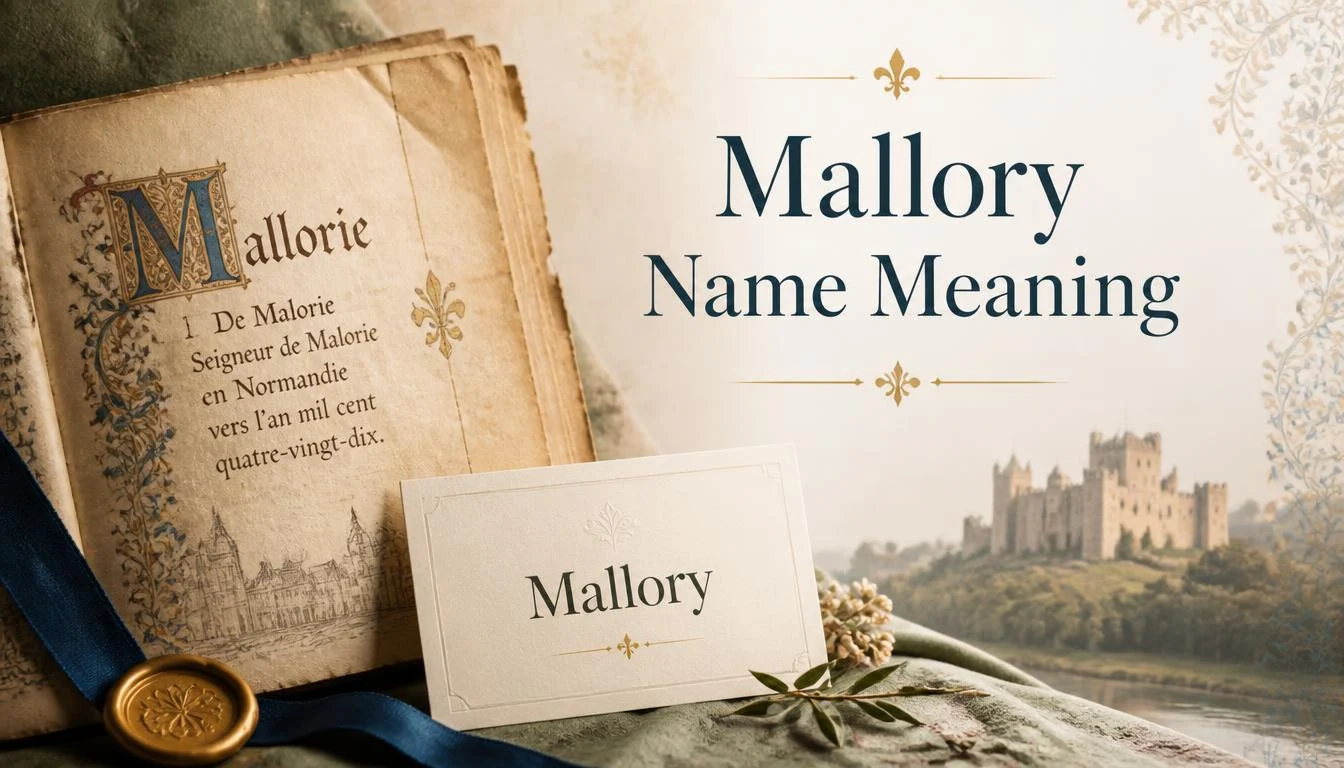
The Mallory name meaning has an intriguing history rooted in an old French surname and medieval naming traditions. Mallory is generally connected with the Old French word malheur, meaning “unfortunate” or “ill-fated.” Although its original meaning may sound unusual today, the name has developed a distinct identity over time and is now appreciated for its graceful sound and surname-style appeal.
The history of Mallory makes it an interesting choice for parents exploring names with European roots and a strong connection to family-name traditions. Beyond its literal meaning, Mallory has a familiar yet distinctive quality that works well in modern naming culture. Exploring its origin, pronunciation, history, popularity, and variations can give you a fuller understanding of what makes the name Mallory unique.
Key Facts Box
| Fact | Details |
|---|---|
| Gender | Girl / feminine in modern English usage |
| Meaning | “Unfortunate,” “ill-fated,” or “unlucky” |
| Origin | Old French, through an English surname of Norman origin |
| Pronunciation | MAL-uh-ree |
| Usage | Modern English given name |
| Related form | Mallaury |
What Is Mallory?
Mallory is a modern English given name that developed from the surname Mallory. The surname has Norman roots and entered English usage after the Norman influence in England. Linguistic references connect it to Old French maleüré, meaning “unfortunate.”
As a first name, Mallory is predominantly feminine in contemporary English usage. Unlike names created directly from words such as Grace or Hope, Mallory reached modern naming culture through a family name.
That surname-to-first-name path explains why Mallory has a distinctly English sound while carrying an older French etymological background.
Mallory Name Meaning
The traditional Mallory meaning is “unfortunate,” “ill-fated,” or “unlucky.” The surname reference from the Dictionary of American Family Names traces Mallory to Old French forms including maloret, maloré, and maleuré.
Traditional Meaning
The original sense describes poor fortune or an unfortunate circumstance. That meaning belongs to the historical word from which the surname developed; it does not describe the personality or destiny of someone named Mallory today.
Names often survive after their original word meanings become distant from everyday usage. Mallory fits that pattern particularly well.
Modern Meaning
Modern parents generally choose Mallory as a familiar English feminine name rather than as a literal reference to misfortune.
So, when someone asks “What does Mallory mean?”, the most accurate short answer is the historical meaning “unfortunate” or “ill-fated.” The modern use of the name does not imply that the bearer will experience bad luck.
Origin and Etymology
Mallory ultimately connects to Old French, with maleüré cited as the source of the English surname. The term carried the sense of being unfortunate or ill-fated.
The surname became associated with England through Norman influence. Ancestry’s surname reference describes Mallory as English and of Norman origin, deriving from Old French forms meaning “ill-fortuned” or “unlucky.”
The surname later became a given name. Behind the Name classifies modern Mallory as an English feminine name derived from this surname and notes its increased visibility in the 1980s through the American sitcom Family Ties.
Some informal sources propose alternative origins, but the documented etymological evidence most consistently supports the Old French explanation. For that reason, claims that connect Mallory to unrelated Hebrew, Irish, German, or armor-related meanings should not be treated as established etymology.
History and Cultural Context
Mallory’s early story belongs to the development of surnames in medieval England. Norman influence brought many French linguistic elements into England, and Mallory became established as an English surname with Norman roots.
The surname also has a notable literary connection through Sir Thomas Malory, the English writer traditionally associated with Le Morte d’Arthur. His name helped preserve Mallory as a recognizable English surname long before it became common as a first name.
The transition to given-name use happened much later. By the modern era, surname-derived first names had become familiar in English-speaking naming culture. Mallory gained particular recognition as a feminine first name in the United States during the late 20th century. Behind the Name specifically associates its increased use in the 1980s with Family Ties, whose character Mallory Keaton carried the name.
Examples
Mallory works naturally as a first name in contemporary English:
- Mallory Grace has a soft, traditional sound.
- Mallory Jane pairs the surname derived name with a short classic middle name.
- Mallory James demonstrates how the name can also work within a modern surname-style naming pattern.
- “Mallory is meeting us for dinner tonight.”
- “Mallory chose her favorite book from the shelf.”
The name also appears in real public life. For example, Mallory Hagan became Miss America in 2013, while Mallory McMorrow has served in the Michigan Senate.
Variants and Spellings
Mallory has several related forms, although they do not all have the same level of usage.
| Form | Usage |
|---|---|
| Mallory | Standard modern English form |
| Mallaury | French form related to Mallory |
| Mallery | Surname spelling variant |
| Mallora | Less common recorded variant |
| Mallor | Rare related form |
Behind the Name lists Mallaury as a French form of Mallory, while Ancestry records Mallery, Mallora, and Mallor among variations associated with the first name.
These forms should not be treated as interchangeable in every country. Spelling preferences depend on language, family tradition, and local naming practice.
Famous People Named Mallory
Several notable people have carried Mallory as a given name.
- Mallory Hagan American public figure who won the Miss America title in 2013.
- Mallory McMorrow American politician and member of the Michigan Senate.
- Mallory Pugh Swanson American professional soccer player who has represented the United States internationally.
These examples show how Mallory has developed beyond its medieval surname background into a recognizable modern first name.
Mallory vs. Related Terms
| Term | Meaning | How It Differs |
|---|---|---|
| Mallory | Traditionally “unfortunate” or “ill-fated” | Modern English given name derived from a surname |
| Mallaury | Related form of Mallory | French form |
| Mallery | Variant surname spelling | Primarily associated with surname usage |
| Malory | Historical spelling of the surname | Closely associated with the medieval surname and literary figure Thomas Malory |
The similar spellings can cause confusion, but they do not necessarily represent identical naming traditions. Mallory is the familiar modern English first name spelling.
FAQs
Is Mallory a girl name?
Yes. Mallory is primarily used as a feminine given name in modern English, although surname-derived names can sometimes appear across genders.
What does the name Mallory mean?
Mallory traditionally means “unfortunate,” “ill-fated,” or “unlucky.” The meaning comes from Old French maleüré, which contributed to the historical surname.
What is the origin of the name Mallory?
Mallory has Old French linguistic roots and an English surname history of Norman origin. The surname developed in England and later became a modern given name.
How do you pronounce Mallory?
Mallory is commonly pronounced MAL-uh-ree, with the emphasis on the first syllable. Behind the Name gives the pronunciation as /ˈmæl.ə.ɹi/.
Is Mallory a French name?
Mallory has Old French etymological roots, but the modern given name is generally classified as an English name because it developed from an English surname.
Is Mallory a biblical name?
No. Mallory does not come from a biblical personal name. Its documented etymology leads instead to Old French and the medieval English surname tradition.
Does Mallory mean “unlucky”?
Historically, yes. The Old French source associated with Mallory carried the sense of being unfortunate or ill-fated. Modern use of Mallory, though, does not carry a literal prediction of bad luck.
Conclusion
Mallory is a modern English feminine name with a distinctive medieval background. Its established etymology traces the name through an English surname to Old French maleüré, meaning “unfortunate” or “ill-fated.” Today, Mallory stands on its own as a familiar first name, largely separated from its original literal meaning.
Read More Articles
- Nathaniel Name Meaning | Biblical Roots, History, and Symbolism In 2026
- Sadie Name Meaning | Biblical Roots, Origin and Symbolism In 2026











2 thoughts on “Mallory Name Meaning | Origin and Everything You Need to Know In 2026”