Quick Answer
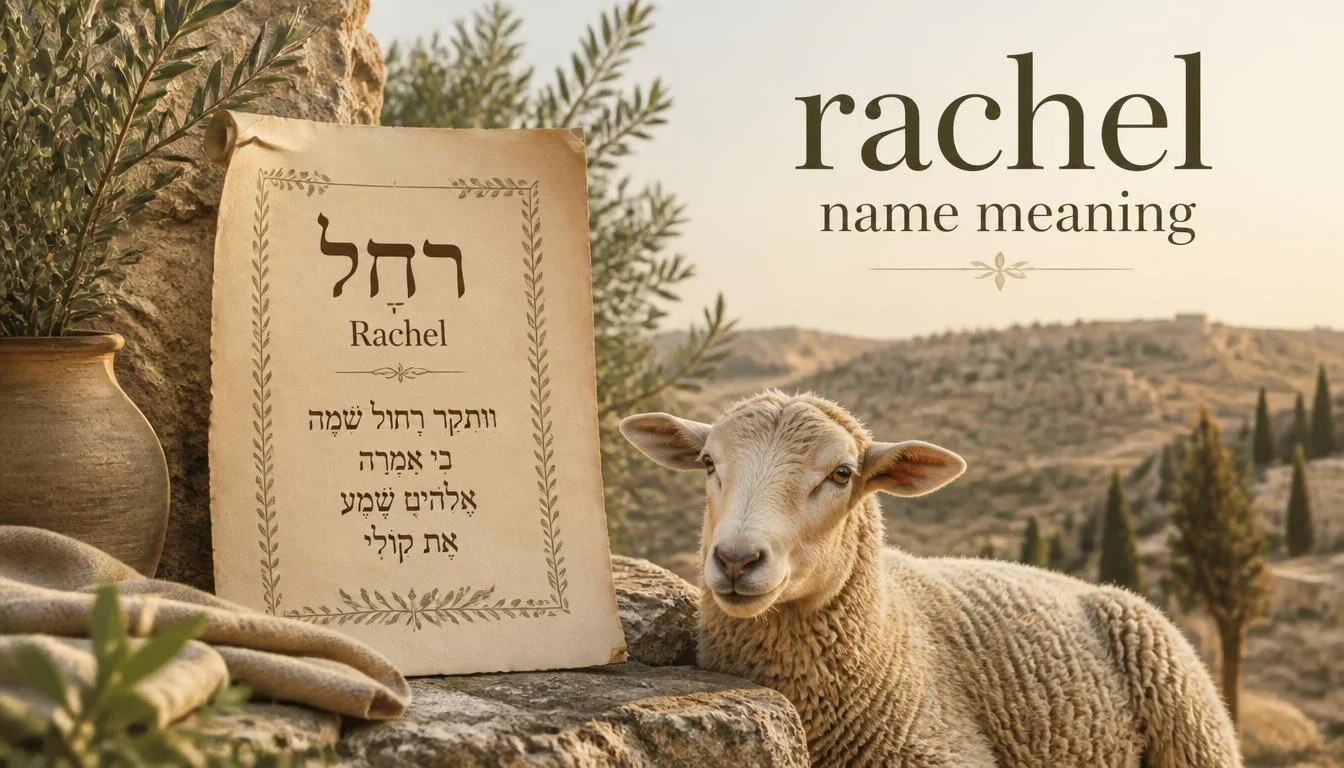
The Rachel name meaning comes from the Hebrew name Raḥel (רָחֵל), traditionally meaning “ewe,” or female sheep. Rachel is a feminine biblical name associated with Jacob’s wife and the mother of Joseph and Benjamin.
The Vincent name meaning has strong roots in Latin and carries a sense of strength, determination, and achievement. Vincent comes from the Latin name Vincentius, which is connected to the verb vincere, meaning “to conquer” or “to overcome.” Because of this origin, the name has long been associated with ideas such as victory, perseverance, and the ability to overcome challenges. Its use across European languages and its connection with several historical and religious figures have helped Vincent remain a recognizable and enduring given name.
Beyond its traditional meaning, Vincent has a refined and classic character that continues to appeal to parents today. The name has appeared in different forms across languages and cultures, including Vincenzo in Italian and Vicente in Spanish and Portuguese. In this guide, we’ll explore the Vincent name meaning, its Latin origin, historical development, pronunciation, variations, cultural significance, and popularity. We’ll also look at the qualities and associations commonly connected with this timeless name.
Key Facts
| Detail | Information |
|---|---|
| Gender | Girl / Feminine |
| Meaning | “Ewe” or “female sheep” |
| Origin | Hebrew / Biblical Hebrew |
| Hebrew Form | רָחֵל (Raḥel) |
| Pronunciation | RAY-chəl |
| Biblical Connection | Rachel, wife of Jacob |
| Related Languages | English, Hebrew, French, Dutch, German |
What Is Rachel?
Rachel is a feminine given name with Biblical Hebrew origins. Its original Hebrew form is רָחֵל, transliterated as Raḥel. The traditional lexical meaning is “ewe,” referring specifically to a female sheep.
The name differs from modern invented names because its history reaches back to an ancient personal name recorded in the Hebrew Bible. It later passed through biblical and European naming traditions before becoming an established name in English and several other languages.
Rachel is generally used as a girl’s name, rather than a gender-neutral given name. Name references classify it as feminine and record usage in English, Hebrew, French, Dutch, German, Biblical Hebrew, and Biblical Latin.
Rachel Name Meaning
The direct traditional meaning of Rachel is “ewe.” An ewe is a mature female sheep, so the meaning describes an animal rather than an abstract quality such as “beauty,” “strength,” or “wisdom.”
That distinction matters because baby-name websites sometimes attach extra symbolic meanings to ancient names. Those interpretations may offer inspiration, but they should not replace the established linguistic meaning.
Traditional Meaning
In Hebrew, Raḥel refers to an ewe. The term has an agricultural and pastoral background that fits the setting of the Hebrew Bible, where sheep and shepherding played significant roles in everyday life and the economy.
The name itself does not literally mean “gentle,” “beautiful,” or “loving.” Those qualities may arise from cultural associations with Rachel’s biblical story, but they are not the direct translation.
Biblical Meaning and Association
Rachel’s story gives the name a much richer cultural identity. Genesis presents her as the younger daughter of Laban and one of Jacob’s wives. Jacob worked for Laban for years because of his love for Rachel.
Rachel later became the mother of Joseph and Benjamin. Her story includes marriage, family conflict, infertility, motherhood, and loss, which gives the name emotional depth within biblical literature.
Origin and Etymology
Rachel comes from Hebrew, specifically the Biblical Hebrew name רָחֵל (Raḥel). Major name references connect the form directly with the Hebrew word meaning “ewe.”
The English spelling Rachel developed through the transmission of the biblical name into other languages and writing traditions. Biblical Latin helped carry the name into European Christian naming culture, while later languages developed their own pronunciations.
The Hebrew pronunciation differs noticeably from the familiar English pronunciation. English commonly uses RAY-chəl, while Hebrew has a pronunciation closer to Ra-khel, with the Hebrew ḥet producing a stronger throat sound.
History and Cultural Context
Rachel has a central place in the biblical family narratives found in Genesis. She was the younger daughter of Laban and the sister of Leah. Jacob wanted to marry Rachel, but Laban first gave him Leah. Jacob later married Rachel as well after completing additional years of service.
Rachel eventually gave birth to Joseph and later Benjamin. According to Genesis, she died while giving birth to Benjamin and was buried on the road toward Ephrath, associated with Bethlehem.
Her name appears again in the prophetic tradition. Jeremiah uses Rachel poetically as a figure of mourning, and the Gospel of Matthew later connects that passage with mourning associated with Bethlehem.
That biblical history helped Rachel become a durable personal name in Jewish and Christian communities. Over time, the name moved beyond religious contexts and became a familiar everyday given name, particularly in English-speaking societies.
Rachel in Modern Naming
Rachel feels traditional without sounding archaic. Its biblical origin gives it considerable historical depth, while its straightforward spelling makes it easy to recognize in English.
The name also has a broad linguistic footprint. Name references record Rachel in English, Hebrew, French, Dutch, and German, along with Biblical and Biblical Latin usage.
In the United States, Rachel still appears in official Social Security baby-name data. The Social Security Administration recorded Rachel at No. 250 for girls in 2025, compared with No. 246 in 2024.
That figure describes U.S. birth registrations only; it does not measure the name’s worldwide popularity.
Examples
Rachel works naturally in both formal and everyday settings:
- Rachel is my sister’s name.
- Rachel chose a traditional biblical name for her daughter.
- The name Rachel has Hebrew origins.
- Rachel means “ewe” in Hebrew.
- Rachel appears as a major figure in the Book of Genesis.
For a baby-name announcement, you might write:
Rachel a classic Hebrew name meaning “ewe,” with deep biblical roots.
The name also fits well with many naming styles. A traditional combination might be Rachel Elizabeth, while a shorter modern pairing could be Rachel Claire.
Variants and Spellings
Rachel has fewer dramatic spelling variations than some ancient names, but its pronunciation and written form change across languages.
| Language / Tradition | Form |
|---|---|
| Hebrew | רָחֵל (Raḥel) |
| English | Rachel |
| French | Rachel |
| Dutch | Rachel |
| German | Rachel |
| Biblical Latin | Rachel |
The written form Rachel therefore remains remarkably stable across several languages, even though speakers may pronounce it differently.
The Hebrew form Raḥel is especially useful when discussing the original name because it reflects the ancient language rather than the later English spelling.
Famous People Named Rachel
Several notable women have carried the name Rachel in science, entertainment, literature, and public life.
- Rachel Carson (1907–1964) American marine biologist, writer, and conservationist. Her book Silent Spring drew major public attention to the environmental effects of pesticide use.
- Rachel Weisz British actress and producer known for film and stage work. She has received major acting awards, including an Academy Award.
- Rachel Platten American singer-songwriter and author known internationally for songs including “Fight Song.”
- Rachel Maddow American television host, author, and political commentator known for her broadcasting career.
These examples show how Rachel functions comfortably across very different professional and cultural settings.
Rachel vs. Related Terms
| Term | Meaning | How It Differs |
|---|---|---|
| Rachel | “Ewe” | A feminine given name from Hebrew |
| Raḥel | Hebrew form of Rachel | Represents the original Biblical Hebrew form |
| Leah | Biblical feminine name | Another biblical woman and Rachel’s sister |
| Rebecca | Biblical feminine name | A separate Hebrew biblical name associated with Isaac’s wife |
| Sarah | Biblical feminine name | Another established Hebrew name with a different origin and meaning |
Rachel and Leah are especially connected because Genesis presents them as sisters who both became wives of Jacob. Their names therefore share a biblical context, but they have different linguistic histories and meanings.
FAQs
Is Rachel a biblical name?
Yes. Rachel is a biblical name from the Hebrew Bible. She appears in Genesis as the younger daughter of Laban, the wife of Jacob, and the mother of Joseph and Benjamin.
What does the name Rachel mean?
Rachel traditionally means “ewe,” or female sheep. The meaning comes from the Hebrew name רָחֵל (Raḥel).
What is the origin of Rachel?
Rachel has Hebrew, specifically Biblical Hebrew, origins. The name later entered other languages and naming traditions, including English, French, Dutch, German, and Biblical Latin.
How do you pronounce Rachel?
In common English pronunciation, Rachel sounds like RAY-chəl. The original Hebrew pronunciation differs because Hebrew uses a consonant sound that English does not reproduce exactly.
Is Rachel a girl’s name?
Yes. Rachel is traditionally a feminine name. Major name references classify it as feminine across its established English, Hebrew, and biblical usage.
Who was Rachel in the Bible?
Rachel was the younger daughter of Laban and one of Jacob’s wives. She became the mother of Joseph and Benjamin and died while giving birth to Benjamin, according to Genesis.
Is Rachel still used as a baby name?
Yes. Rachel continues to appear in U.S. baby-name records. The Social Security Administration placed it at No. 250 among girls’ names in 2025.
Conclusion
Rachel is a classic feminine name with a clear Hebrew origin and the traditional meaning “ewe.” Its connection to Rachel of Genesis gives it a long biblical history, while its continued use in English and other languages keeps it familiar today.
Read More Articles
- Ari Name Meaning | A Short Name With a Rich History In 2026
- Brandon Name Meaning |History, Popularity and Related Names In 2026











2 thoughts on “Rachel Name Meaning | Etymology, History and Name Traits In 2026”