Quick Answer
Rebecca name meaning is commonly understood as “to tie,” “to bind,” or “captivating.” The name has Hebrew origins and appears in the Bible through Rebekah, the wife of Isaac and mother of Jacob and Esau.
The Rebecca name meaning has deep biblical roots and a long history of use across different cultures. Rebecca is traditionally connected to the Hebrew name Rivkah (רִבְקָה), which appears in the Old Testament. The name is commonly associated with meanings such as “to tie,” “to bind,” or “captivating,” although its exact original meaning remains a subject of linguistic discussion. In the Bible, Rebecca is the wife of Isaac and the mother of Jacob and Esau, giving the name a strong place in biblical history.
Over the centuries, Rebecca became widely used in English-speaking countries and developed several familiar forms, including Rebekah and Rivka. Its classic sound and biblical heritage have helped it remain recognizable across generations. If you are considering Rebecca for a baby, researching a family name, or simply curious about its background, exploring its origin, meaning, pronunciation, history, and cultural significance can give you a clearer picture of what makes this name enduring.
Key Facts About Rebecca
| Feature | Details |
|---|---|
| Gender | Girl |
| Meaning | To bind, to tie, captivating |
| Origin | Hebrew |
| Pronunciation | ri-BEK-uh |
| Biblical Form | Rebekah |
| Related Forms | Rebekah, Rivka, Rifka |
| Common Nicknames | Becky, Becca, Bec, Bex |
What Is the Name Rebecca?
Rebecca is a traditional feminine given name with Hebrew origins. The biblical form of the name appears as Rebekah, while Rebecca became a common English spelling.
The name carries an ancient history that reaches back to the Hebrew Bible. In the Book of Genesis, Rebekah becomes the wife of Isaac and the mother of Jacob and Esau.
Because of this biblical connection, Rebecca has a strong place in Jewish and Christian naming traditions. At the same time, the name has developed a broader cultural identity through centuries of use in Europe and the English-speaking world.
Rebecca also offers several familiar nicknames. Becca and Becky remain common shortened forms, while Bex gives the name a more modern and informal style.
Rebecca Name Meaning
Rebecca has traditionally received several related interpretations. The most common explanations connect the Hebrew name with “to bind,” “to tie,” or “to join.”
Some sources also associate the name with “captivating” or “ensnaring.” These interpretations reflect the traditional understanding of the name’s Hebrew root, although exact etymological explanations can vary.
Meaning of “To Bind”
The interpretation “to bind” gives Rebecca a symbolic sense of connection and attachment. It can suggest bringing people together or creating a lasting bond.
That interpretation fits naturally with the broader symbolism that people often associate with names: loyalty, connection, affection, and relationships.
Meaning of “Captivating”
Another traditional interpretation describes Rebecca as “captivating.” This reading gives the name a sense of charm and appeal.
The idea does not describe a person’s guaranteed personality. Instead, it represents one traditional interpretation of the name and contributes to the qualities that families may associate with Rebecca.
Modern Meaning
Today, parents may choose Rebecca because they appreciate its biblical heritage, classic sound, and familiar spelling. The name feels traditional without becoming difficult to pronounce or spell.
Its long history also gives it a sense of continuity. A child named Rebecca can carry a name that has remained recognizable across many generations.
Origin and Etymology of Rebecca
Rebecca ultimately comes from the Hebrew name Rivkah, commonly transliterated as Rivka or Rivqah.
The biblical form appears in English as Rebekah, while Rebecca became a widely used spelling in English and several other languages.
The exact etymology of Rivkah remains a matter of scholarly discussion. Traditional explanations often connect it with a Hebrew root associated with binding or tying. Some interpretations extend that idea toward “captivating” or “ensnaring.”
Because ancient name etymologies can involve linguistic uncertainty, it helps to distinguish the widely repeated traditional meanings from claims about one definitive original translation.
Biblical History of Rebecca
Rebecca holds an important place in the Book of Genesis. She first appears when Abraham’s servant travels to find a wife for Isaac.
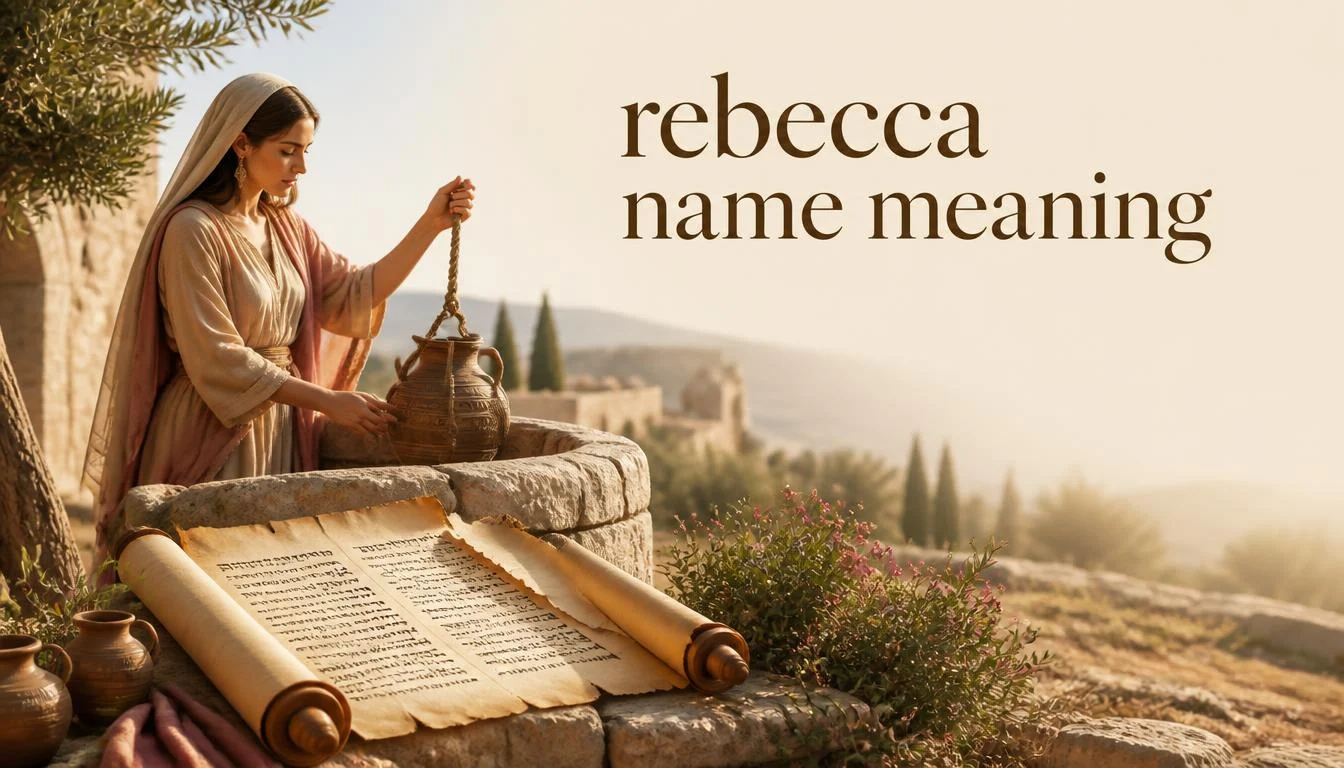
According to the biblical account, Rebecca meets the servant at a well and offers water to him and his camels. The encounter leads the servant to recognize her as the woman who fits Abraham’s family requirements.
Rebecca then travels to meet Isaac and becomes his wife. Genesis later identifies her as the mother of Esau and Jacob.
Her story gives the name a particularly strong biblical identity. For Jewish and Christian families, that connection can matter as much as the name’s linguistic meaning.
Rebecca and Isaac
Rebecca’s marriage to Isaac places her among the major women in the Genesis narrative. Her story connects several generations of the biblical patriarchal family.
She becomes the mother of twins, Esau and Jacob. Jacob later becomes the father of the twelve team of Israel according to the biblical tradition.
Because of this family connection, Rebecca occupies an important position in the biblical genealogy
Rebecca in Jewish and Christian Traditions
Rebecca has a long history in both Jewish and Christian naming traditions.
In Jewish tradition, the biblical name appears as Rivka or Rivkah. The name remains recognizable within Jewish communities and continues to connect with the biblical matriarch.
Christian traditions adopted the name through the Old Testament. As biblical names became common across Europe, different languages developed their own forms and spellings.
English speakers commonly use Rebecca, while the biblical English form Rebekah also remains established.
How to Pronounce Rebecca
In standard American English, Rebecca usually has three syllables, with the stress on the middle syllable.
The pronunciation remains fairly consistent in English, although speakers from different regions may produce small vowel differences.
Variants and Spellings of Rebecca
Rebecca has several established forms across languages and naming traditions.
| Form | Language/Tradition | Notes |
|---|---|---|
| Rebecca | English and several European languages | Common modern form |
| Rebekah | Biblical English | Traditional biblical spelling |
| Rivka | Hebrew/Yiddish usage | Common Hebrew-related form |
| Rivkah | Hebrew transliteration | Another transliteration of the Hebrew name |
| Rifka | Yiddish and related usage | Variant form in Jewish naming traditions |
| Rebeca | Spanish/Portuguese | Form used in Romance-language traditions |
These forms share the same broad historical source, although spelling and pronunciation can vary according to language.
Rebecca vs. Rebekah
Rebecca and Rebekah represent the same biblical name in different spelling traditions. Rebekah stays closer to the traditional English biblical spelling, while Rebecca became the more familiar modern spelling in many English-speaking contexts.
Rebecca vs. Rivka
Rivka comes directly from the Hebrew naming tradition. Rebecca represents an English and broader European form that developed from the same underlying name.
Famous People Named Rebecca
Many notable women have carried the name Rebecca.
- Rebecca Romijn an American actress and model known for film and television roles.
- Rebecca Hall a British actress and filmmaker known for work in film and television.
- Rebecca Ferguson a Swedish actress known for international film and television roles.
- Rebecca Black an American singer and internet personality.
- Rebecca West an English writer, journalist, and literary critic whose career spanned much of the 20th century.
- Rebecca Clarke a British composer and violist recognized for her classical music.
These namesakes come from different periods and professional fields. Their careers demonstrate the name’s continued use across generations and cultures.
Rebecca vs. Related Names
| Term | Meaning | How It Differs |
|---|---|---|
| Rebecca | To bind, tie; traditionally also “captivating” | English form of an ancient Hebrew name |
| Rebekah | Same traditional name and meaning | Biblical English spelling |
| Rivka | Hebrew form | Closer to the Hebrew naming tradition |
| Becca | Short form of Rebecca | Modern nickname rather than a separate ancient name |
| Becky | Short form of Rebecca | Familiar English nickname |
The closest comparison involves Rebecca and Rebekah because both represent the same biblical name. Rivka provides the Hebrew form, while Becca and Becky function as shortened forms.
Nicknames for Rebecca
Rebecca offers several nickname possibilities, which gives parents flexibility.
Common options include:
- Becca
- Becky
- Bec
- Becks
- Bex
- Reba
Not every nickname has the same regional popularity. Becca and Becky have particularly strong recognition in English-speaking settings.
Some people named Rebecca also choose to use the full name throughout their lives. The name already has a concise enough structure that it does not require a shortened form.
What Does Rebecca Symbolize?
Rebecca’s traditional meanings and biblical history create several symbolic associations.
The idea of binding or joining can suggest connection, loyalty, and lasting relationships. Meanwhile, the interpretation “captivating” can suggest charm and personal appeal.
Her biblical story also gives the name associations with family, faith, hospitality, and determination.
These qualities represent cultural and symbolic interpretations rather than fixed personality traits. A person’s character depends on their individual experiences and choices.
Is Rebecca a Biblical Name?
Yes. Rebecca is a biblical name, although the traditional biblical English spelling appears as Rebekah.
Rebekah appears in Genesis as Isaac’s wife and the mother of Jacob and Esau. Her role gives the name a direct connection to one of the central family narratives in the Hebrew Bible and Christian Old Testament.
Because of this history, Rebecca remains a popular choice among families who value biblical names.
Is Rebecca a Hebrew Name?
Yes. Rebecca comes from the Hebrew name Rivkah/Rivqah.
The English form developed through historical language and translation traditions. Different languages use different spellings, but they trace the name back to the same ancient source.
Is Rebecca a Girl’s Name?
Yes. Rebecca is traditionally a girl’s name and has a long-established feminine usage.
The biblical Rebecca was a woman, and later European and English naming traditions continued to use the name for girls and women.
Is Rebecca an Old-Fashioned Name?
Rebecca has an ancient origin, but calling it simply “old-fashioned” misses its continued cultural presence.
The name has appeared across many generations and remains recognizable in modern English. Its biblical history gives it a classic foundation, while nicknames such as Becca and Bex can give it a more contemporary feel.
That combination allows Rebecca to work in both traditional and modern naming styles.
What Names Are Similar to Rebecca?
Families who like Rebecca may also consider names with similar sounds, history, or biblical connections.
Some options include:
- Rebekah
- Rachel
- Rachel
- Elizabeth
- Rebecca
- Ruth
- Sarah
- Reba
- Rivka
- Abigail
Among these, Rebekah and Rivka have the closest direct relationship because they represent forms of the same underlying name.
FAQs
What does the name Rebecca mean?
Rebecca traditionally means “to bind” or “to tie.” Some interpretations also connect the name with “captivating” or “ensnaring.” The name comes from the Hebrew Rivkah.
Is Rebecca a biblical name?
Yes. The biblical form Rebekah appears in Genesis. She becomes Isaac’s wife and the mother of Jacob and Esau.
What is the Hebrew form of Rebecca?
The Hebrew form is commonly transliterated as Rivka or Rivkah. These forms trace back to the same ancient name as Rebecca.
What is the difference between Rebecca and Rebekah?
Rebecca and Rebekah represent the same biblical name. Rebekah appears as the traditional English biblical spelling, while Rebecca became a widely used spelling in English and other languages.
What does Rebecca mean in the Bible?
The biblical name connects with the Hebrew Rivkah. Traditional interpretations associate it with binding or tying, while some explanations extend the meaning toward being captivating.
What are common nicknames for Rebecca?
Common nicknames include Becca, Becky, Bec, Becks, and Bex. The choice often depends on personal preference and regional usage.
Is Rebecca a Hebrew or Greek name?
Rebecca has Hebrew origins. Its underlying form, Rivkah, comes from the Hebrew naming tradition.
What names are similar to Rebecca?
Rebekah and Rivka are the closest forms. Other names with a similar biblical or classic style include Rachel, Sarah, Abigail, Ruth, and Elizabeth.
Conclusion
Rebecca carries a rich Hebrew and biblical heritage, with traditional meanings connected to binding, joining, and captivating. Its connection with Rebekah gives the name centuries of history, while forms such as Rivka, Becca, and Rebekah add linguistic variety. For families seeking a classic girl’s name with strong biblical roots and lasting cultural recognition, Rebecca remains a distinctive choice.
Read More Articles
- Brandon Name Meaning |History, Popularity and Related Names In 2026
- Rachel Name Meaning | Etymology, History and Name Traits In 2026











1 thought on “Rebecca Name Meaning | Biblical Origin, History and Symbolism In 2026”